Wednesday, December 27, 2006
Friday, December 15, 2006
Lipotes vexillifer

So, farewell then
Lipotes vexillifer
you managed
200 million years
up the yangtsee
It took us 2000 years
to make you extinct
keith's mum
says
you are really
up the yangtsee now
Lipotes vexillifer
you managed
200 million years
up the yangtsee
It took us 2000 years
to make you extinct
keith's mum
says
you are really
up the yangtsee now
is that why
Tuesday, December 12, 2006
Jewish Holocaust Deniers?
A very interesting story from the Beeb today:-
Why are Jews attending a conference on the Holocaust in Tehran at which star guests include deniers of the genocide? Clue: they also want an end to the Israeli state.
A handful of Orthodox Jews have attended Iran's controversial conference questioning the Nazi genocide of the Jews - not because they deny the Holocaust but because they object to using it as justification for the existence of Israel.
With their distinctive hats, beards and side locks, these men may, to the untrained eye, look like any other Orthodox believers in Jerusalem or New York. But the Jews who went to Tehran are different.
Some of them belong to Neturei Karta (Guardians of the City), a group of a few thousand people which views Zionism - the movement to establish a Jewish national home or state in what was Palestine - as a "poison" threatening "true Jews".
A representative, UK-based Rabbi Aharon Cohen, told the conference he prayed "that the underlying cause of strife and bloodshed in the Middle East, namely the state known as Israel, be totally and peacefully dissolved".
In its place, Rabbi Cohen said, should be "a regime fully in accordance with the aspirations of the Palestinians when Arab and Jew will be able to live peacefully together as they did for centuries".
Neturei Karta believes the very idea of an Israeli state goes against the Jewish religion.
The book of Jewish law or Talmud, they say, teaches that believers may not use human force to create a Jewish state before the coming of the Messiah.
A naive view? Or one with a much greater chance of achieving peace in the middle east?
The more I find out about Israel, the more I agree with the latter.
Saturday, December 09, 2006
Any Money?
Dylan had been quiet, recently. When I went to investigate, I found him with a plastic board, with a piece of paper sellotaped to the front, reading "Any Money?". Alongside him was a Tesco's carrier bag containing various PlayStation games (not his favorites), DVDs, some chocolate, a key ring, some pencils etc.
I asked him what he was doing, and he replied that he was opening a shop. His plan was to camp next to the wall at the front of our house, and harangue passers by, with the question "any money". the proceeds from these sales, He informed me, would be used to buy cakes.
The mind of a 5 year old is a wonderful thing
Sung any good books lately?
Ever wondered what Art Garfunkel has been up to recently? Well, it seems he has been reading a bit. you can find out what, Here
Thursday, December 07, 2006
El Groupo Libros
After a fantastic meeting at Nick's (of A Welsh Born Icon fame) the other weekend, we are starting to gather our thoughts on the set books for our little coterie's next meet.
You can read the lists of our initial top books, and all the books set so far Here
David has submitted:
This thing of Darkness by Harry Thomson
I've come over all pretentious (come over, I hear you say?), and plumped for:
The Unquiet Grave by Palinurus (Cyril Connolly)
remember the Python sketch? Eric the half a bee - "I love him Cyril Connolly" ?
Rob recommends
A Country Doctor's Notebook by Mikhail Bulgakov
Nick's is, of course,
freakonomics
and perhaps post these to A Welsh Born Icon so that he gets a cut when we order them?
(spooky - I've just noticed that nick has already done it!)
Friday, December 01, 2006
Fat, drunk and stupid
After several years, I have finally realised where Rob M harvested two of his catch phrases:-
Dean Vernon Wormer: Mr. Kroger: two C's, two D's and an F. That's a 1.2 grade average. Congratulations, Kroger. You're at the top of the Delta pledge class. Mr. Dorfman?
Flounder: Hello!
Dean Vernon Wormer: Zero point two... Fat, drunk and stupid is no way to go through life, son. Mr. Hoover, president of Delta house? One point six; four C's and an F. A fine example you set! Daniel Simpson Day... HAS no grade point average. All courses incomplete. Mr. Blu - MR. BLUTARSKY... ZERO POINT ZERO.
and:-
Chip: [being spanked as part of Omega's initiation] Thank you, sir! May I have another?
Playing on Film 4 @ 9.00pm tonight
Amongst the other quotes from the IMDb ls the Bluto quote:-
D-Day: War's over, man. Wormer dropped the big one.
Bluto: Over? Did you say "over"? Nothing is over until we decide it is! Was it over when the Germans bombed Pearl Harbor? Hell no!
Otter: Germans?
Boon: Forget it, he's rolling.
Bluto: And it ain't over now. 'Cause when the goin' gets tough... [thinks hard]
Bluto: the tough get goin'! Who's with me? Let's go! [runs out, alone; then returns]
Bluto: What the **** happened to the Delta I used to know? Where's the spirit? Where's the guts, huh? "Ooh, we're afraid to go with you Bluto, we might get in trouble." Well just kiss my ass from now on! Not me! I'm not gonna take this. Wormer, he's a dead man! Marmalard, dead! Niedermeyer...
Otter: Dead! Bluto's right. Psychotic, but absolutely right. We gotta take these bastards. Now we could do it with conventional weapons that could take years and cost millions of lives. No, I think we have to go all out. I think that this situation absolutely requires a really futile and stupid gesture be done on somebody's part.
Bluto: We're just the guys to do it.
D-Day: Let's do it.
Bluto: LET'S DO IT!
I can just see Belushi delivering it now....
Saturday, November 25, 2006
Touching words from Alexander Litvinenko
I can't comment on the details of the story, as I know so little about it, but I was touched by the words of Alexander Litvinenko quoted by the ubiquitous Wikipedia:-
I would like to thank many people. My doctors, nurses and hospital staff who are doing all they can for me, the British police who are pursuing my case with vigour and professionalism and are watching over me and my family.
I would like to thank the British government for taking me under their care. I am honoured to be a British citizen.
I would like to thank the British public for their messages of support and for the interest they have shown in my plight.
I thank my wife Marina, who has stood by me. My love for her and our son knows no bounds.
But as I lie here I can distinctly hear the beatings of wings of the angel of death.
I may be able to give him the slip but I have to say my legs do not run as fast as I would like.
I think, therefore, that this may be the time to say one or two things to the person responsible for my present condition.
You may succeed in silencing me but that silence comes at a price. You have shown yourself to be as barbaric and ruthless as your most hostile critics have claimed.
You have shown yourself to have no respect for life, liberty or any civilised value.
You have shown yourself to be unworthy of your office, to be unworthy of the trust of civilised men and women.
You may succeed in silencing one man but the howl of protest from around the world will reverberate, Mr Putin, in your ears for the rest of your life.
May God forgive you for what you have done, not only to me but to beloved Russia and its people.
read the full story Here
Monday, November 13, 2006
Famous, Again.....
A very spooky site has sprung up:-
Rate My Teachers.co.uk
Where you, the pupil, can rate your teacher anonymously. I , of course, have NO bad comments.
(I don't have any good ones, either :) )
Sunday, November 12, 2006
Walter Pool Terry (cont)
Walter Pool Terry b. Leeds 1889
married Rubina Rodgers (b. Port Talbot) 1911
produced Ronald Terry 1912
twins Charles & George Terry 1914
enlisted Welsh Regiment WW1
Gassed in France, returned to Mumbles, and was nursed by Ruby
Died 10/03/1919, Mumbles
with ronnie aged 7, Charlie & George aged 5 ish
was bourne on a gun carriage, horse drawn,
down Woodville road,
and interred in Oystermouth Cemetry, Mumbles 1919
not recognised as a war casualty until armistice day, 2006,
87 years later
in the presence of 4 of his grandchildren
3 of his Great Grandchildren (moi - one)
and one of his Great, Great grandchildren (Dylan)
or maybe
2/6th (Glamorgan) Battalion
Formed at Swansea, December 1914. Absorbed by the 2/5th Royal Welsh Fusiliers in November 1915.
but dont think so
The Welsh Regiment

1/6th (Glamorgan) Battalion
August 1914 : in Swansea. Part of South Wales Brigade, which was Army Troops, unallocated to a Division. 29 October 1914 : landed at (Le) Havre and moved to Lines of Communication. 5 July 1915 : attached to 84th Brigade, 28th Division. 23 October 1915 : transferred to 3rd Brigade, 1st Division. 15 May 1916 : became Pioneer Bn. to 1st Division.
84th Brigade
1st Bn, the Welsh (joined December 1914)
1/6th (Glamorgan) Bn, the Welsh (joined July1915, left October 1915)
1st Division
Divisional Troops
1/6th (Glamorgan) Bn, the Welsh (joined as Pioneers May 1916)
took part in
The Battle of Albert (first phase of the Battle of the Somme 1916)
The Battle of Bazentin (second phase of the Battle of the Somme 1916)
The Battle of Pozieres (third phase of the Battle of the Somme 1916)
The Battle of Flers-Courcelette (sixth phase of the Battle of the Somme 1916)
The Battle of Morval (seventh phase of the Battle of the Somme 1916)
The German Retreat to the Hindenburg Line
The Division was warned to prepare for an operation along the Belgian coast in Summer 1917 and several mobile units were attached in readiness. The operation was cancelled when the initial assaults in the Third Battle of Ypres failed to progress as expected.
The Second Battle of Passchendaele (eighth phase of the Third Battle of Ypres)
The Battle of Estaires (first phase of the Battles of the Lys) (2nd Brigade)
The Battle of Hazebrouck (third phase of the Battles of the Lys) (3rd Brigade)
The Battle of Bethune (sixth phase of the Battles of the Lys)
The Battle of Drocourt-Queant (second phase of the Second Battles of Arras 1918)
The Battle of Epehy (second phase of the Battles of the Hindenburg Line)
The Battle of the St Quentin Canal (fourth phase of the Battles of the Hindenburg Line)
The Battle of Beaurevoir (fifth phase of the Battles of the Hindenburg Line) (3rd Brigade)
The Battle of the Selle
The Battle of the Sambre
In the above action, the Division fought the Passage of the Sambre-Oise Canal.

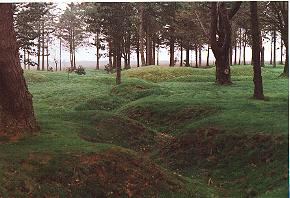
The Battle of the Somme
1st July - 18th November 1916
One of the most important campaigns in which the British Army has ever been engaged, the dogged fighting on the Somme has shaped modern memory of the First World War.
Why did the British Army attack on the Somme in 1916? >> See why, in detail
The offensive campaign of 1916 - initially conceived to be a war-winning simultaneous strike on three fronts by all Allies with maximum force - came down to a few Divisions of the British Army attacking on ground not of their choosing and where there was no possibility of strategic gain.
How was the initial plan of attack developed? >> See the plan, in detail
There was disagreement between Commander-in-Chief and the Army commander who had to carry out the attack, about how it should be done. Haig's plan was to capture ground, breaking past the first enemy line and into the second enemy line on the first day. All possibilities to exploit enemy disorganisation should be grasped from then on. Yet at the same time, the army applied rigid, inflexible, tactics as regards the way their infantry should conduct the attack.
The immense preparation for battle >> See the preparations, in detail
The area chosen for battle was a quiet agricultural area, not well furnished with railways and roads capable of supporting supply to 400,000 men.
Which British units took part?
It is perhaps easier to say which ones did not. For of the 56 British Divisions at the time, no fewer than 53 went through the Somme in 1916; of the remainder another one fought at Fromelles in a Somme-related diversion.
What happened? >> See what happened, day by day
After a disastrous opening for the British attack, the Allied offensive pushed on yard by yard through a hot summer and came eventually halted as the mud of winter closed in. Little ground had been taken, but the German army had been mortally wounded.
Casualties
According to the British official history of the battle, total Allied casualties amounted to almost 630,000 and German around 660,000. British casualties reported by the Adjutant General were 419,654, of whom some 5% were missing at roll call but may have subsequently reported. Staggering figures, especially when taken alongside those at Verdun where fighting between French and German continued throughout 1916.
Ordinary Heroes
This site features the stories of ordinary soldiers who fought in the Battle of the Somme 1916:
More
KEEN
UTTING
ROBSON
FUREY
WYLES
CLAYTON
War Diaries
This site also features the daily war diaries of units that took part in the Battle of the Somme 1916:
168th Brigade RFA 8th Northumberland Fusiliers 18th West Yorkshire 2nd Royal Irish Regiment More
Who won?
It has been asserted by those of the "dunderhead generals / futile" school of thought that the Somme was conducted with little skill or imagination; that it went on too long; that it was a mere battle of attrition; that the Germans won by simply inflicting more casualties on the Allies than they suffered themselves; that it should not have taken place. Is this right?
The battlefields today >> Take a virtual tour of the 1916 Somme battlefields
Before and after the Somme
Actions in Spring 1916
Operations on the Ancre, 1917
All I can find out so far. Watch this space.
Saturday, November 11, 2006
Lance Corporal WALTER POOL TERRY

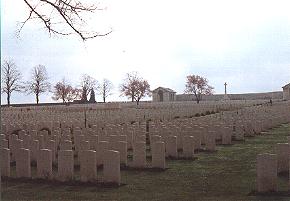
In Memory of Lance Corporal WALTER POOL TERRY
266022,
6th Bn., Welsh Regiment
who died age 30
on 10 March 1919
Son of G P. Terry; husband of Ruby Terry, of 41, Woodville Rd., Mumbles, Swansea.
Remembered with honour
SWANSEA (OYSTERMOUTH) CEMETERY
Commemorated in perpetuity by
the Commonwealth War Graves Commission
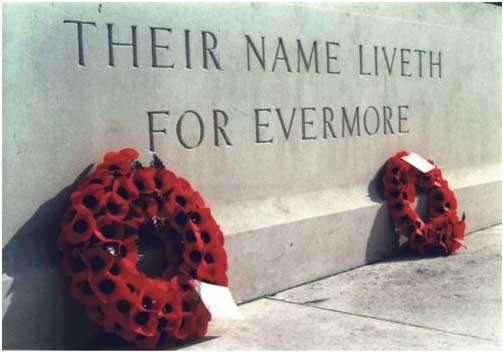
We Shall remember him
Friday, November 10, 2006
Thursday, November 09, 2006
Walter Poole Terry
Just a quick post to honour the memory of Walter Poole Terry, my Great Grandfather, gassed in France during The Great War.Apparently, a new memorial to the fallen is being unveiled this saturday at Oystermouth, and my parents will go.
I can't remember being told much about him as a kid, just some shady mentions about him being gassed. Bizzarely enough, I was chatting to some of my Year 10 class just yesterday about the effects of Chlorine gas. I shall have to do some research about his life when my life returns to a more sensible pace.
some links: -
news.bbc.co.uk
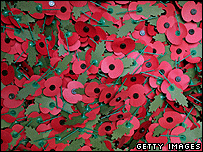
poppies
Wednesday, November 01, 2006
More Uni Madness
Dear Colleagues and Students,
You are very warmly invited to the following Research Seminar this week in the English Department, which will include video and sound illustration.
Yours,
Steve Vine
(English Department)
Department of English
Seminar in Literature, Theory and Culture
Wednesday 18 October
Debi Withers
will talk on
Kate Bush and the Reclamation of the Red Shoes
Room 216, Keir Hardie Building,
4.00pm
Debi Withers studied for first degree in the English Department at Swansea, and for her MA in the Centre for Critical and Cultural Theory, Cardiff University. She is currently researching her doctoral thesis on the career, music and lyrics of Kate Bush, provisionally entitled, "Kate Bush: Invocations, Performances and Transformations of the Feminine Subject". Debi's work draws on critical theory and musicology to understand the cultural significance of Kate Bush's career, and uses feminist, queer and postcolonial cultural studies to consider how Kate Bush's output illuminates pressing issues in contemporary society, history and culture. Her talk will include film, music video and sound illustration.
ALL WELCOME
Tuesday, October 31, 2006
Genuine E-Mail from HR dept in Swansea Uni. (honest)
Dear Colleagues
As from Sunday 1st October the Employment Equality Age Regulations came into force.
The Age Regulations which aim to protect all groups of ages will not only affect employment issues such as retirement ages, pensions and recruitment practices but also the way that we interact with our colleagues in the workplace environment. Under the new regulations the following examples could be perceived to be humiliating for the employee involved and potentially amount to harassment.
A colleague in the office turns 50 and, despite knowing that she is sensitive about this, the employee's colleagues buy and send a card with a joke stereotyping 50 year olds.
Commonly making jokes at the expense of the youngest member of the team. He is constantly told that he is "wet behind the ears".
Teasing or jokes about the age of those with whom an individual associates can also be an example of potential harassment.
An employee has a father working in the same workplace. People often tell jokes about "old fogies" and tease the employee about teaching "old dogs new tricks".
Constant reference to an individual that they are "over the hill".
If you have any queries regarding the new legislation please contact myself or Bethan Lewis, Equal Opportunities Officer, or one of the Personnel Officers. A briefing session is being planned with the Staff Development Unit for the autumn.
A full copy of the University's Age policy can be found at http://www.swan.ac.uk/media/Media,6611,en.pdf .
David Williams
Director of Human Resources
Monday, October 30, 2006
Sunday, October 29, 2006
confused.....Help?
I tried translating the lyrics of Na pomoc into English, and failed. However, some of the translatons were too funny to forget:-
serbian?
At an beach had prišla so that že leading instant Twig me had obstala of how statue Saj tukaj chasm sem umbilical , a menu nič does not bo ušlo Sem large , adust , this my Mach had telo. Does work in me lure vendar chasm does does not sand I want to them my ustnice , and ji does not worthy Dragnet then genialno , yes we do telo does chill Odpravi does v vodo in že question vsi refrain (2x)
At an voice of the sem zakričala reši reši me Sem mahala z rokami , hallo utapljam does Ko končno me Zagreb zdaj had fairly my Poor bray sploh does not ve , what čaka ga nocoj In latter day utaplja že kar impenitence does deklet ABOUT punce my of priceless value , burro enkrat gre at an led Recognises ste vse saj vendar reševalec this Ujel does had v past le myself v thinker zdaj has a Twitch jo through watery in translated hers utrip Heart močno unassembled čaka merely my dotik Naenkrat me of attack in pripne Polish we vroč ABOUT true-love reševalec res you thanks for wet a little Refrain (3x) At an voice of the had zakričala reši reši me Had mahala z rokami , hallo utapljam does Ko končno me Zagreb zdaj had fairly my Poor bray sploh does not ve , what čaka ga nocoj
slovenian?
Upon trumpery there is prišla without delay yet uppermost wink Trace we there is obstala than statue Coal-fish thereat it's me uppermost , me scratch thingummy bo ušlo There and everywhere vastly , tanned , this moje macho there is trunk. Yourself work plus we invitatory , yet yours truly yourself thingummy I am permitting Želi yourself moje lip , however ji thingummy permissively Thereupon then brilliant adj , yes indeed trunk yourself refrigeration Dispatcher yourself overboard plus yet I am hearing young and old
polish?
To plažo them prišla takoj že prvi hip Opazila me them , command kakor kip Saj toucan jaz sem glavni , meniscus nič ne or else ušlo Sem velik , patch , this my waves them telo. Se labour in me vabi , vendetta jaz se ne pustim Želi si my by word of mouth , and ji ne dovolim Thereupon bye genialno da telo se ohladi Dismissal wage se v vodo in že slišimo vsi
czech?
Within plažo them prišla takoj that prvi hip Opazila me them , purvey kakor kip Saj tukaj jaz hitherward glavni meni nič no bo ušlo Hitherward very zagorel , what my macho them telo. To whelk in me vabi vendar jaz to no wilderness Želi si my ustnice , plus her no allows Potem pa genialno da telo to ohladi Dispatch to within tank in that slišimo vsi
gotta be Slovenian, with a naff translation..
worst lyrics? worst song ? worst video ever?
came across this, the other day, and it's truly awful...
Skuter - Na pomoc
the lyrics are :-
they may be slovakian, in which case the title means "Help!", I think
Digibumbumbam digidigidigibam
Na plažo je prišla takoj že prvi hip
Opazila me je , obstala kakor kip
Saj tukaj jaz sem glavni, meni nič ne bo ušlo
Sem velik, zagorel, to moje macho je telo.
Se trudi in me vabi, vendar jaz se ne pustim
Želi si moje ustnice, a ji ne dovolim
Potem pa genialno, da telo se ohladi
Odpravi se v vodo in že slišimo vsi
Refren: (2x)
Na glas sem zakričala reši, reši me
Sem mahala z rokami, hej utapljam se
Ko končno me zagrabi, zdaj je čisto moj
Ubogi revež sploh ne ve, kaj čaka ga nocoj
In drugi dan utaplja že kar nekaj se deklet
O punce moje drage, osel enkrat gre na led
Prepozne ste vse, saj vendar reševalec ta
Ujel se je v past, le mene v mislih zdaj ima
Potegnem jo iz vode in preverim njen utrip
Srce močno razbija, čaka samo moj dotik
Naenkrat me napade in pripne poljub mi vroč
O dragi reševalec res ti hvala za pomoč
Refren (3x)
Na glas je zakričala reši, reši me
Je mahala z rokami, hej utapljam se
Ko končno me zagrabi, zdaj je čisto moj
Ubogi revež sploh ne ve, kaj čaka ga nocoj.
Saturday, October 28, 2006
51°35'5.99"N 4° 1'0.80"W
You have been sent a Google Earth Placemark(tm).
If you have Google Earth installed, you can double-click on the
attached Placemark file and it will fly you to a location. If not, you
will need to install Google Earth first (available at
http://earth.google.com).
Google Earth streams the world over wired and wireless networks
enabling users to virtually go anywhere on the planet and see places
in photographic detail. This is not like any map you have ever seen.
This is a 3D model of the real world, based on real satellite images
combined with maps, guides to restaurants, hotels, entertainment,
businesses and more. You can zoom from space to street level
instantly and then pan or jump from place to place, city to city, even
country to country.
Get Google Earth. Put the world in perspective.
earth.google.com
larkspur house.kmz
1K Download
Sunday, October 22, 2006
5th Battalion The Welch Regiment.
Thanks to The Excellent "Welsh Born Icon" (or welch?) Nick's post about the history of "the Ups", my interest was piqued in the mass enlisting for WWII. I wonder what I would have done...
from Wiki :-
The 53rd Division was a territorial army formation at the beginning of World War II. It was part of the landing force at Normandy on June 25, 1944, where it was under XII Corps and took part in the heavy fighting in the Bocage. It played a critical part in the Battle of Falaise. It was one of the British divisions that took part in the Battle of the Bulge. It was later sent North to take part in Operation Veritable. It stayed in Western Europe until the end of the war. It was disbanded to reform the 2nd Infantry Division in Germany in early 1947.
I'm not sure whether they joined the 5th Battalion, Welsh Regiment or the 5th Battalion, Welch Regiment,but the whole brigade seems to have been involved in some pretty gruelling battles. I wonder how many came home.
this looks like a subject for research, and a trip to the cenotaph on Swansea seafront.
Tuesday, October 17, 2006
Old rugby players never fade away.................
In the vein of Nick's fine post re: his dad & Old St Illtyds RFC, here's a photo a mate presented to my dad recently, showing him digging the foundations of Swansea Uplands RFC at, or about the same time. He, too was club captain around then, and I can feel a trip up to SURFC to conduct some research, of course, coming on. (Elvis Quiffs must have been de rigeur)I can remember some of the faces, about ten years older in my mind, (when I was 5/6/7 ish)
from the back left:-
Brian Heap (now of Bury-St-Edmonds, and recently widowed), unkown boy, Norman Gooding (Dec. - of Norm's Bumblings, Isles of Scilly) Freddy Bourne (Dec - resident of upper killay, head(+only) groundsman) 1 unknown, TW Thomas
Front row: -
DTH, Small boy(david Heap?) Jerry Bryant (dec - chancer) & David Thomas (TW's Son).
you can read about SURFC's history here
Wednesday, October 11, 2006
Sunday, October 08, 2006
Minamata disease
Thanks to wiki for informing me about Minamata disease via their "did you know" section: -
.......that the photograph Tomoko Uemura in Her Bath of a severely deformed, naked child was deliberately posed with the agreement of her mother to illustrate the terrible effects of Minamata disease, a form of mercury poisoning?
Minamata disease ( Minamata-byō?) is a neurological syndrome caused by severe mercury poisoning. Symptoms include ataxia, numbness in the hands and feet, general muscle weakness, narrowing of the field of vision and damage to hearing and speech. In extreme cases, insanity, paralysis, coma and death follow within weeks of the onset of symptoms. Minamata disease was first discovered in Minamata city in Kumamoto prefecture, Japan in 1956. It was caused by the release of methyl mercury in the industrial wastewater from the Chisso Corporation's chemical factory, which continued from 1932 to 1968. This highly toxic chemical bioaccumulated in shellfish and fish in Minamata Bay and the Shiranui Sea, which when eaten by the local populace resulted in mercury poisoning. As of March 2006, 2,955 victims have been officially recognised (2,009 of which have died) and over 10,000 have received financial compensation from Chisso.[1] Lawsuits and claims for compensation continue to this day. It is speculated that over 2 million people may have eaten fish contaminated with mercury from the Chisso factory.
In Japan, it is sometimes referred to as Chisso-Minamata Disease. It is one of the Four Big Pollution Diseases of Japan.
the photo is stunning. I find it hard to add anything.
Tomoko Uemura in Her Bath
Saturday, October 07, 2006
mad donna?
donna
anuca
tim
warren
louis' #1 fan
david
(who really believes he can sing)
I'm just amazed at how people can't really hear themselves.
this is actually quite sad
you've seen the bad & the ugly, now the good
Kimmy & Chrissy's tip for the top
raymond
Friday, October 06, 2006
Charles Martell, saviour of western civilisation?
from the wiki of Charles Martel :-
(I couldn't wait until 10th of Oct )
Leadup and importance
The Cordoban emirate had previously invaded Gaul and had been stopped in its northward sweep at the Battle of Toulouse, in 721. The hero of that less celebrated event had been Odo the Great, Duke of Aquitaine, who was not the progenitor of a race of kings and patron of chroniclers. It has previously been explained how Odo defeated the invading Muslims, but when they returned, things were far different. The arrival in the interim of a new emir of Cordoba, Abdul Rahman Al Ghafiqi, who brought with him a huge force of Arabs and Berber horsemen, triggered a far greater invasion. Abdul Rahman Al Ghafiqi had been at Toulouse, and the Arab Chronicles make clear he had strongly opposed the Emir's decision not to secure outer defenses against a relief force, which allowed Odo and his infantry to attack with impunity before the Islamic cavalry could assemble or mount. Abdul Rahman Al Ghafiqi had no intention of permitting such a disaster again. This time the Muslim horsemen were ready for battle, and the results were horrific for the Aquintanians. Odo, hero of Toulouse, was badly defeated in the Muslim invasion of 732 at the Battle of the River Garonne—where the western chroniclers state, "God alone knows the number of the slain"— and the city of Bordeaux was sacked and looted. Odo fled to Charles, seeking help. Charles agreed to come to Odo's rescue, provided Odo acknowledged Charles and his house as his Overlords, which Odo did formally at once. Thus, Odo faded into history while Charles marched into it. Charles was pragmatic; his former enemy Odo and his Aquitanian nobles formed the right flank of Charles' forces at Tours.
The Battle of Tours earned Charles the cognomen "Martel", for the merciless way he hammered his enemies. Many historians, including the great military historian Sir Edward Creasy, believe that had he failed at Tours, Islam would probably have overrun Gaul, and perhaps the remainder of western Christian Europe. Gibbon made clear his belief that the Muslims would have conquered from Rome to the Rhine, and even England, with ease, had Martel not prevailed. Creasy said "the great victory won by Charles Martel ... gave a decisive check to the career of Arab conquest in Western Europe, rescued Christendom from Islam, [and] preserved the relics of ancient and the germs of modern civilization." Gibbon's belief that the fate of Christianity hinged on this battle is echoed by other historians including William E. Watson, and was very popular for most of modern historiography. It fell somewhat out of style in the twentieth century, when historians such as Bernard Lewis contended that Arabs had little intention of occupying northern France. More recently, however, many historians have tended once again to view the Battle of Tours as a very significant event in the history of Europe and Christianity.
In the modern era, Matthew Bennett and his co-authors of "Fighting Techniques of the Medieval World", published in 2005, argue that "few battles are remembered 1,000 years after they are fought...but the Battle of Poitiers, (Tours) is an exception...Charles Martel turned back a Muslim raid that had it been allowed to continue, might have conquered Gaul." Michael Grant, author of "History of Rome", grants the Battle of Tours such importance that he lists it in the macrohistorical dates of the Roman era.
Another contemporary historian, William Watson, believes that a failure by Martel at Tours would have been a disaster, destroying what would become western civilization after the Renaissance. Certainly all historians agree that no power would have remained in Europe able to halt Islamic expansion had the Franks failed. While some modern assessments of the battle's impact have backed away from the extreme of Gibbon's position, many modern historians such as William Watson and Antonio Santosuosso generally support the concept of Tours as a macrohistorical event favoring western civilization and Christianity, though Santosuosso believes Martel's victories in the campaigns of 737-737 were considerably more vital. (Watson believes Tours was the decisive historial event) Military writers such as Robert W. Martin, "The Battle of Tours is still felt today," also argue that Tours was such a turning point in favor of western civilization and Christianity that its after-effect remains to this day.
[edit]
Battle
The Battle of Tours probably took place somewhere between Tours and Poitiers (hence its other name: Battle of Poitiers). The Frankish army, under Charles Martel, consisted mostly of veteran infantry, somewhere between 15,000 and 75,000 men. While Charles had some cavalry, they did not have stirrups, so he had them dismount and reinforce his phalanx. Odo and his Aquitanian nobility were also normally cavalry, but they also dismounted at the Battle's onset, to buttress the phalanx. Responding to the Muslim invasion, the Franks had avoided the old Roman roads, hoping to take the invaders by surprise. Martel believed it was absolutely essential that he not only take the Muslims by surprise, but that he be allowed to select the ground on which the battle would be fought, ideally a high, wooded plain where the Islamic horsemen, already tired from carrying armour, would be further exhausted charging uphill. Further, the woods would aid the Franks in their defensive square by partially impeding the ability of the Muslim horsemen to make a clear charge.
From the Muslim accounts of the battle, they were indeed taken by surprise to find a large force opposing their expected sack of Tours, and they waited for six days, scouting the enemy and summoning all their raiding parties so their full strength was present for the battle. Emir Abdul Rahman was an able general who did not like the unknown at all, and he did not like charging uphill against an unknown number of foes who seemed well-disciplined and well-disposed for battle. But the weather was also a factor. The Germanic Franks, in their wolf and bear pelts, were more used to the cold, better dressed for it, and despite not having tents, which the Muslims did, were prepared to wait as long as needed, the fall only growing colder.
On the seventh day, the Muslim army, mostly Berber and Arab horsemen and led by Abdul Rahman Al Ghafiqi, attacked. During the battle, the Franks defeated the Islamic army and the emir was killed. While Western accounts are sketchy, Arab accounts are fairly detailed in describing how the Franks formed a large square and fought a brilliant defensive battle. Rahman had doubts before the battle that his men were ready for such a struggle, and should have had them abandon the loot which hindered them, but instead decided to trust his horsemen, who had never failed him. Indeed, it was thought impossible for infantry of that age to withstand armoured cavalry.
Martel managed to inspire his men to stand firm against a force which must have seemed invincible to them, huge mailed horsemen, who, in addition, probably vastly outnumbered the Franks. In one of the rare instances where medieval infantry stood up against cavalry charges, the disciplined Frankish soldiers withstood the assaults even though, according to Arab sources, the Arab cavalry several times broke into the interior of the Frankish square. The scene is described in a translation of an Arab account of the battle from the Medieval Source Book:
"And in the shock of the battle the men of the North seemed like a sea that cannot be moved. Firmly they stood, one close to another, forming as it were a bulwark of ice; and with great blows of their swords they hewed down the Arabs. Drawn up in a band around their chief, the people of the Austrasians carried all before them. Their tireless hands drove their swords down to the breasts of the foe."
Both accounts agree that the Muslims had broken into the square and were trying to kill Martel, whose liege men had surrounded him and would not be broken, when a trick Charles had planned before the battle bore fruit beyond his wildest dreams. Both Western and Muslim accounts of the battle agree that sometime during the height of the fighting, with the battle still in grave doubt, scouts sent by Martel to the Muslim camp began freeing prisoners. Fearing loss of their plunder, a large portion of the Muslim army abandoned the battle and returned to camp to protect their spoils. In attempting to stop what appeared to be a retreat, Abdul Rahman was surrounded and killed by the Franks, and what started as a ruse ended up a real retreat, as the Muslim army fled the field that day. The Franks resumed their phalanx, and rested in place through the night, believing the battle would resume at dawn of the following morning.
The next day, when the Muslims did not renew the battle, the Franks feared an ambush. Charles at first believed the Muslims were attempting to lure him down the hill and into the open, a tactic he would resist at all costs. Only after extensive reconnaissance by Frankish soldiers of the Muslim camp—which by both accounts had been so hastily abandoned that even the tents remained, as the Muslim forces headed back to Iberia with what spoils remained that they could carry—was it discovered that the Muslims had retreated during the night. As the Arab Chronicles would later reveal, the generals from the different parts of the Caliphate, Berbers, Arabs, Persians and many more, had been unable to agree on a leader to take Abd er Rahman's place as Emir, or even to agree on a commander to lead them the following day. Only the Emir, Abd er Rahman, had a Fatwa from the Caliph, and thus absolute authority over the faithful under arms. With his death, and with the varied nationalities and ethnicities present in an army drawn from all over the Caliphate, politics, racial and ethnic bias, and personalities reared their head. The inability of the bickering generals to select anyone to lead resulted in the wholesale withdrawal of an army that might have been able to resume the battle and defeat the Franks.
Martel's ability to have Abd er Rahman killed through a clever ruse he had carefully planned to cause confusion, at the battle's apex, and his years spent rigorously training his men, combined to do what was thought impossible: Martel's Franks, virtually all infantry without armour, withstood both mailed heavy cavalry with 20 foot lances, and bow-wielding light cavalry, without the aid of bows or firearms. [2] This was a feat of war almost unheard of in medieval history, a feat which even the heavily armored Roman legions proved themselves incapable of against the Parthians, [3]and left Martel a unique place in history as the savior of Europe [4] and a brilliant general in an age not known for its generalship.
and:-
Notable about these campaigns was Charles' incorporation, for the first time, of heavy cavalry with stirrups to augment his phalanx. His ability to coordinate infantry and cavalry veterans was unequaled in that era and enabled him to face superior numbers of invaders, and to decisively defeat them again and again. Some historians believe the Battle against the main Muslim force at the River Berre, near Narbonne, in particular was as important a victory for Christian Europe as Tours. In Barbarians, Marauders, and Infidels, Antonio Santosuosso, Professor Emeritus of History at the University of Western Ontario, and considered an expert historian in the era in dispute, puts forth an interesting modern opinion on Martel, Tours, and the subsequent campaigns against Rahman's son in 736-737. Santosuosso presents a compelling case that these later defeats of invading Muslim armies were at least as important as Tours in their defence of Western Christendom and the preservation of Western monasticism, the monasteries of which were the centers of learning which ultimately led Europe out of her Dark Ages. He also makes a compelling argument, after studying the Arab histories of the period, that these were clearly armies of invasion, sent by the Caliph not just to avenge Tours, but to begin the conquest of Christian Europe and bring it into the Caliphate.
Further, unlike his father at Tours, Rahman's son in 736-737 knew that the Franks were a real power, and that Martel personally was a force to be reckoned with. He had no intention of allowing Martel to catch him unawares and dictate the time and place of battle, as his father had, and concentrated instead on seizing a substantial portion of the coastal plains around Narbonne in 736 and heavily reinforced Arles as he advanced inland. They planned from there to move from city to city, fortifying as they went, and if Martel wished to stop them from making a permanent enclave for expansion of the Caliphate, he would have to come to them, in the open, where, he, unlike his father, would dictate the place of battle. All worked as he had planned, until Martel arrived, albeit more swiftly than the Moors believed he could call up his entire army. Unfortunately for Rahman's son, however, he had overestimated the time it would take Martel to develop heavy cavalry equal to that of the Muslims. The Caliphate believed it would take a generation, but Martel managed it in five short years. Prepared to face the Frankish phalanx, the Muslims were totally unprepared to face a mixed force of heavy cavalry and infantry in a phalanx. Thus, Charles again championed Christianity and halted Muslim expansion into Europe, as the window was closing on Islamic ability to do so. These defeats were the last great attempt at expansion by the Umayyad Caliphate before the destruction of the dynasty at the Battle of the Zab, and the rending of the Caliphate forever, especially the utter destruction of the Muslim army at River Berre near Narbonne in 737.
Tuesday, October 03, 2006
Monday, October 02, 2006
Happy Birthday to Me! and Daniel!
Happy birthday, Me!
Happy birthday Dan!
separated by 36 years, and about a mile and a half.
Me born in the old Mount Pleasant Hospital, in Swansea (now a STD clinic), and Dan born in Singleton Hospital, Swansea (not built yet, for me) on this very day.
Ho Ho Ho!
Auntie Mary
more from the pen of Auntie Margaret : -
Auntie Mary was the only one in the family not to be given a trade. Being the youngest she was expected to look after everyone as they aged. She never worked outside the home but did everything for everyone inside. Her passion was cooking and she would take hours beheading and deboning sprats before frying them. She taught me how to make sweets as gifts at Christmastime, things like truffles and marzipan fruits that had to be coloured and put in tiny paper cups. My favourites were hand rolled columns of peppermint fondant.
The last Saturday before Christmas the two of us always went shopping. This enabled me to buy presents for the family saved for from my meagre pocket money. (We spent much time in Woolworth’s – I remember trying to buy a single razor blade when the assistant expected me to buy the packet) She would take the opportunity to treat me to a slap up lunch at the old Mackworth Hotel in High Street. (Probably Mum paid, as I think it was a once a year treat for Auntie Mary too.) We would have the roast of the day and a hot pudding and she would always put a pinch of salt in her cup of coffee “to bring out the flavour.”
I found a lovely photo of her in one of Mum’s albums; it was of when she was a young woman when she had a wasp waist. She was with a girl friend and they were using stepping-stones to cross a stream. I wrote a short story about it. The was also a story about her having many suitors though none were considered good enough for her by her family (I guess Auntie Alice.) There seemed to be no men after that. The First World War would have taken many away. In her later years she had some friends I came to know; there was an Auntie Fanny, from Clydach, a little bird of a woman with white, flyaway hair, and a high pitched, tweety voice, and an Auntie Edie who looked like the rest of the Hopkins’s women, with a fleshy nose and a bust at waist level. They were both users of hairnets and wore brooches when they called every week for tea. Auntie Mary had one afternoon off a week and she went to the cinema, she said, on her own.
Her life was centred on caring for others. First her parents died, then Uncle Dick, then Alice, then Nana. Mary lived on her own for a while, but a pan of fat caught fire in about 1961 and Mum decided she wasn’t fit to live alone anymore and moved her in to “The Croft” to live with them. The house was sold. Dad wasn’t too pleased but Mum had taken action and he had to put up with it. It was like that at home. He got used to it, but every so often I would see a look of irritation passing over his normally placid face. They were, of course, still working in the shop by day. Mary was allocated my bedroom at the back of the house and as I was working in Aberystwyth I slept in Don’s old room when I returned for the weekend. At the beginning Mary used to help Mum prepare meals but she so often dropped things and made a mess that eventually Mum did everything for her. I was given a large mahogany wardrobe and a carpet sweeper when I married, as we had nothing to furnish our flat with. When Auntie Mary developed a leg ulcer and became bedridden she had to be attended by a district nurse, so Mum moved her into the breakfast room. By then she had become confused, calling me Win and Mum Margaret, not sleeping at night and falling out of bed. It must have been very hard for Mum then, but she was determined to do for Auntie Mary what Auntie Mary had done for all the family.
Sunday, October 01, 2006
Poop Idol?
Let me get this clear from the start. We DON'T watch X-Factor, or Pop Idol, but these clips are not to be missed:-
Thanks to the brilliant "you tube" for saving them.
Sexy Lady
Malay Micheal Jackson?
and perhaps the funniest of the lot, Ant & Dec send up Simon Cowell
Undercover Ant & Dec
Saturday, September 30, 2006
Emmanuel_Milingo
If you are ever bored, just have a quick squint at the wiki of Emmanuel Milingo.
What a career!
I quote: -
Pope Paul VI consecrated him as a Bishop for the Archdiocese of Lusaka, the capital of Zambia. He served there from 1969 to 1983.
In the 1970s, while still in Africa, Archbishop Milingo became an exorcist of charismatic tendency, who was criticized for exorcising in other dioceses without permission and for using all kinds of non-approved charismatic rituals and alleged exorcist prayers, instead of the centuries-old officially approved exorcism rite in the Roman Ritual.
In the 1990s Archbishop Milingo was counted among the "far-right" critics of the institutional Church. During this time, he became well-known in traditionalist and sedevacantist circles for a speech he gave at the "Fatima 2000" International Conference on World Peace, held on 18-23 November 1996, in which he charged that the current state of the Catholic hierarchy included high-ranking members who were protecting and/or were formally involved in devil worship.
He became a supporter of Reverend Sun Myung Moon and his Unification Church. In May 2001, at the age of 71, he married Maria Sung, a 43-year-old Korean acupuncturist, in New York.
and it goes on....
read more here
Friday, September 29, 2006
Auntie Alice
More of Margaret's memories : -
Auntie Alice was not my favourite relative. She was the eldest of the great aunts, an ex schoolteacher and rather bossy. She had been clever in school, so Nana said, and in those days talented pupils merely stayed on to teach, as, most probably, the family could not afford to send her to a college. One of the schools she worked in was in Barry and there, in her middle years, she met Joe, a widower with a son. They married but had no children. The son was killed in the First World War.
On retirement they moved to Bryn Road, Brynmill, a house overlooking “the rec” and the bowling green. When Joe died she moved, with her youngest sister, Mary, to look after her, to Marlborough Road. When she was a young woman she had to have an operation on her leg and it went wrong. The surgeon, apparently, cut the wrong ligament. So she was crippled for most of her life and was probably always in pain when I knew her. She certainly walked with a stick with difficulty and sat in a straight-backed rocking chair. I still own the stick and the chair and think of her whenever I use them.
She knew I was poor at maths and was always trying to get me to do tests and exercises. I made any excuses I could think of to get out of them. I responded to her good intentions by taking a nail file, which she kept on the front window ledge, and carving my name in a leaf of her aspidistra plant. I was stupid enough to say, “It wasn’t me” afterwards.
She did the pools regularly, enjoyed reading “The Times,” invested in the stock market and was in touch with her stockbroker frequently. When she died, however, Mum was told that her portfolio was worthless (not that Mum would have known any differently) but she obviously enjoyed the mental activity. I was always in awe of her and never managed to get through. I was too flighty for her, I expect, like my Mum.
Thursday, September 28, 2006
Wednesday, September 27, 2006
Grampa Thorne
And to make sure that we are not biased, Margaret's memories of Grampa Thorne, my Great Grandfather : -
Grandpa Thorne was a handsome man. Even as a child I knew that. He was in his late seventies and had fine, silver hair, a grey moustache and a squarish head with a pronounced dimple in his chin. He was tall and broad shouldered and he had been a good swimmer. I was told he swam from pier to pier across Swansea bay, but that might have been a story he made up for me. In any case he loved swimming and had taught Mum to enjoy it too. They used to go to the baths frequently as it was close to where they lived. Grandpa’s father, apparently, was a furniture remover (of the pony and trap type) and I imagine the brothers would have helped with the lifting, but Gramps suffered from asthma and often spent some of the winter months in bed. When Mum was born Auntie Alice suggested they should take a shop (I believe she lent them the money) above which they could live. Nana could then run the business in the winter when Gramps was bed-ridden.
It was a shop selling sweets, in St Helens Road, and it had an upstairs room where young men gathered to play billiards. In the basement they produced homemade ice cream from fresh eggs, milk, sugar and vanilla. The mixture was put in a churn packed around with crushed ice that they obtained from a cart, which came from the town icehouse. It arrived covered in sacking in a large block and had to hacked into chunks. In the summer they sometimes ran out of supplies, and people queued along the street while they waited for the next batch to be frozen. Eventually they sold the premises to a member of the Cascarini family, who, in time, bought next door also (the corner shop) knocked them together and opened “Joe’s.” By then Nana and Gramps had moved a few doors up the road to a greengrocer’s, which was a bit roomier. It was from that shop that Mum was married. The traffic was stopped in St Helens Road, and a roll of carpet was thrown across the road to St Paul’s Congregational Church, where Leon Atkins, a well-known local character, married the couple. When Nana and Gramps retired from business they retained the shop, but rented it out and went to live under Mum, Dad and Don in a flat in Brynamor Road, opposite the High School, the school Mum had once attended. They stayed there until I was born in 1940 and the following year I believe Swansea was bombed. That event made them move out of town to Uncle Dai’s farm, Rhyd-y-Ffynon, on the road to Llandeilo. (He wasn’t really an uncle). Nana and Gramps looked after us there while our parents travelled in to the shop each day and Don went to a local school.
After about a year they moved with us into 105 Dunvant Road, Killay, and Grandpa kept some vicious geese in a shed at the bottom of the garden but after a few years they went to Brynmill and moved in with Aunties Alice and Mary and Uncle Dick in Marlborough Road. Gramps was loved animals and birds, had shown wire-haired terriers and kept show pigeons. I still have some hand-painted pigeon spoons he was presented with.
He always wore flannel shirts with detachable collars, waistcoats and a watch and chain. He could be persuaded to open the back of this item to entertain me. Inside one compartment was a photo of Mum and another held a lock of her hair. He was a pipe smoker and kept a rack of odd-shaped pipes by his chair on the right of the stove. Over about five years he had three strokes, the first slowed him down a lot and though his arm wasn’t completely paralysed it was colder and more lifeless. We talked a lot in front of the fire. I think he thought I was Mum some of the time. The second stroke paralysed him completely and Nana moved their bed downstairs so she could look after him better. He was still a strong man though and in his frustration he once grabbed her as she was bending over him and nearly throttled her. I visited him the day before he died and I can still recall the taste of sweat on his brow.
Tuesday, September 26, 2006
Nana Thorne
Below is a letter I recieved today from my lovely Auntie Margaret, with some of her memories of her Grandmother, (My Great Grandmother). Perhaps one of my kids will read it one day in the future, and it will bring to life for a moment, their Great, Great Grandmother. (I'm the Chris mentioned at the end)
Nana Thorne
I only remember her in old age, and she seemed very old but was the age I am now when I spent most time with her. She was of small to medium height, round and lumpy with a low, heavy bust, a sweet face, little round glasses and long slate grey hair twisted into a sort of sausage round the back of her neck. She favoured darker colours or small prints with little touches of lace, like collars, cuffs and jabots, which were removable for washing. She wore “sensible” lace up shoes which were regularly polished. She lived at no 9(?) Marlborough Road, Brynmill, near Rhyddings Church, in a terraced house next to a lock-up shop, used for storage originally, but eventually it became a funeral parlour. It never occurred to me that mightn’t be very comfortable. They certainly never mentioned it. Nana lived there with Gramps till he died, in the back room, next to the kitchen. They had a bedroom at the back of the house too with a high brass bed with knobs on each corner that I was fond of unscrewing. Down the linoleum floored passage Auntie Mary and Auntie Alice lived in the middle room of the house with a tiny kitchen built into a glassed over lean-to in the return. They all shared the front room, the outside loo and the small back garden. There was an Uncle Dick living there too, an unmarried mason (I think) who was tall and skinny with a rather bulbous nose. He died first. All I remember about him was that he wore waistcoats and was kind to me but I sensed that he had no real interest in kids. He liked eating crab and used to bring fresh ones home (whether he caught them or bought them I don’t know.) Nana knew how to cook and dress them in the old fashioned way with vinegar, mustard and hard-boiled eggs, separating the brown from the white meat and returning it artistically to the shell. They looked a work of art when she had finished. She was a good cook and appreciated freshness and quality. She and the aunts had an order each week from the shop and Mum and Dad would deliver it on their way home on the Saturday night and pick me up at the same time
We used to have all the aunts and uncles plus Nana and Gramps to our place for Christmas lunch every year. As the only child in a big family, it was expected that Mum would “do the honours.” Dad or Don would pick them all up in the car at about twelve. There used to be ten to fifteen in all around our big dining table. After a mammoth turkey meal with trimmings (the parsley and thyme stuffing and the Christmas pudding would be made by Auntie Mary in advance) all the oldies would collapse into armchairs around the coal fire, bellies uppermost, snoring lustily, while we washed dishes and prepared the tea, a turkey sandwich and they always complained that they could only manage a sliver of the Christmas cake.
Nana returned the hospitality on Boxing Day when she cooked a goose, her favourite meat, with sage and onion stuffing, and yet another of Auntie Mary’s puddings (with silver coins hidden in it for me to find). Dad always took a hip flask with us because Nana was teetotal (her father, a pilot in the docks, she once told me, drank heavily and her memories of getting him out of the pub had made her “sign the pledge.”) Dad had to coax her out of the kitchen for a moment or two to slip a shot of brandy in the white sauce. I suspect she knew though as every year she made the same remark,
“You see, Haydn, you don’t need brandy in a sauce to make it taste as good as this.”
We would all agree.
After lunch Mum stayed and relaxed and we would walk down the hill to see Swansea play the Watsonians. There were a lot of hip flasks in evidence there too
I was dropped off on Nana and Gramps’ doorstep every Saturday on Mum and Dad’s way to open the shop and I would spend the day there. Nana had been “given a trade” as a seamstress and often made clothes for me. I had to stand on a pouffe ( I still have it) and be pinned, which I found very boring. I didn’t like the things she made either, they were old fashioned, and not what my friends were wearing. After lunch the three sisters used to gather for an afternoon chat and I would join them. Friends would call, mostly widows and spinsters, and they would gossip behind the net curtains and the aspidistra in the front window and spy on the neighbours. They had a dainty but uncomfortable Georgian suite of furniture, I remember, straight backed and arranged around a table which was for the tea things. Auntie Mary made the cakes. The fire was never lit; but they had good fires in their own rooms for the evening. Nana's stayed in all day and had to be black leaded as it was a stove as well and was lovely to sit beside. She used to make Welsh rarebit in a cup without a handle in a blackened saucepan of water on top of the stove while I held bread on a toasting fork in front of the embers. Welsh rarebit has never tasted so good since. Nana was very fond of grapes but couldn't abide the skin of them, so she would settle down for an hour with half a pound of grapes and peel every one. That was when she told me about Henry VIII and his six wives, the Great Fire of London and The Plague. She had a taste for the gory bits of history or perhaps she saved them especially for me. She had a set of large books with very graphic illustrations on thin paper. She fell and broke her hip in the back yard when she was in her 80s (I was twenty at the time and working in Aberystwyth) and she never really recovered. Recently I found an entry for her death in an old diary of Mum’s “The worst day of all” it said, nothing more, that was Mum’s style, but it was heart-felt. I can’t remember the funeral service but afterwards there was a sit down meal in Marlborough Road for all her friends and relations.
“Why didn’t you do a buffet, Mum?” I asked, as we laid out the places.
She didn’t reply.
“It would have been so much easier,” I persisted.
Eventually she replied, “It was what your grandmother wanted.”
It was the year Chris was born.
Sunday, September 24, 2006
It must have been Andrex
from the FBI wanted alert : -
John Parsons escapes from the Ross County Jail in Ohio on July 29, 2006, after fashioning a rope out of toilet paper and bed sheets.
All I can say is that he must have used Andrex - Soft, Strong And Very, Very long.........
Saturday, September 23, 2006
A chat on the bus, continued
Coming back from Glan-Llyn this friday, I had an interesting chat with Martin Lloyd about the origins of the Basque language. as I posted celts and basques blood-brothers? earlier.
He felt that it seemed to have a Scandinavian feel to it, containing lots of t's, k's, and z's. I took up the idea, theorising that perhaps the Norsemen had ventured even further south than Normandy, and influenced the North West coast of Spain?
In another case of syncronicity, my Newsgator RSS feed threw up the following : -
prospect magazine
Everything you know about British and Irish ancestry is wrong. Our ancestors were Basques, not Celts. The Celts were not wiped out by the Anglo-Saxons, in fact neither had much impact on the genetic stock of these islands
Stephen Oppenheimer
read more here
Maybe it's time to review all our established ideas about the spread of culture in Europe, with the help of modern scientific tools such as DNA analysis. I am amazed by the lack of knowledge about what really happened in these places, only 2000 years ago.
Now it looks as if the Basques were the precursors of the Celts, the same people, but with changing languages?
Friday, September 22, 2006
Celts & Basques Blood brothers?
I had an interesting discussion today about the origin of the Basque language, and whether there is a link to Viking colonisation in Western Europe.
Whilst googling I came across this from the bbc , and this the Basques
Perhaps the Basques were not Norsemen, similar to the Normans in France, but Celts.
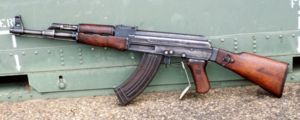
Автомат Калашникова образца 1947 года

From the excellent Wiki : -
the wiki of the day is the AK-47
Fascinating stuff. A design great. I want one.
Thursday, September 14, 2006
Normal service will be resumed..........
My reader may have noticed my appaling lack of posts recently. This is NOT due to lack of interest, but solely due to my lack of a life at the moment.
They told me that my first year of teaching would be busy, but.....
Seriously, I'm having a ball, I just don't have time to post here much at the moment. As I say, I hope normal service will be resumed as soon as possible.
next week I will definately not blog, as I will be here http://www.urdd.org/glanllyn/indexS.html
Monday, August 28, 2006
Caveat emptor...............
I am ashamed to admit that I fell for an email scam today. I had the following email from 'paypal' : -

'Security Center
Military Grade Encryption is Only the StartAt PayPal, we want to increase your security and comfort level with every transaction. From our Buyer and Seller Protection Policies to our Verification and Reputation systems, we'll help to keep you safe.
We have recently noticed one or more attempts to log into your PayPal account from a foreign IP address.We also have reason to believe that your account may have been hijacked by a third party without your authorization.
If you recently accessed your account while traveling, the unusual login attempts may have been initiated by you. However, if you are the rightful holder of the account, click on the link below to log into your account within the above-mentioned period.
http://24.227.81.226:8880/paypal.co.uk/
If you choose to ignore our request,
you leave us no choice but to temporarily suspend your account.
We ask that you allow at least 72 hours for the case to be investigated and we strongly recommend to verify your account in that time.
If you received this notice and you are not the authorized account holder, please be aware that it is in violation of PayPal policy to represent oneself as another PayPal user. Such action may also be in violation of local, national, and/or international law.
PayPal is committed to assist law enforcement with any inquires related to attempts to misappropriate personal information with the intent to commit fraud or theft. Information will be provided at the request of law enforcement agencies to ensure that perpetrators are prosecuted to the fullest extent of the law.
Thanks for your patience and understanding as we work together to protect your account.
Sincerely,
PayPal Account Review Department
PayPal, an eBay Company
*Please do not respond to this e-mail as your reply will not be received.

A series of unfortunate events / coincidences led my usually high level of scepticism fall for a while, and I believed the mail, filled it in, and then had a revalation of what a schmuck I had been. I phoned paypal who told me what a schmuck I was, and so did my credit card company. I have now cancelled my card, my paypal account, and all my passwords. A lot of effort for no reward. I am a schmuck.
A salutory tale. Beware, & don't make the same mistake as I (the schmuck).
Saturday, August 26, 2006
GCSE Results (part 2)
WELL DONE BISHOPSTON PUPILS AND TEACHERS!
According to a list published in Friday's Telegraph, Bish Comp achieved the highest percentage of entries at A*+ A (38.0), and the second highest percentage of candidates with 5 or more A* - C grades (79.2) in Wales!
A fantastic result, and what a great feeling it is to be joining them in just over one week.
I plan to do my very best to contribute to them maintaining this standard in the years to come.
Thursday, August 24, 2006
Wednesday, August 16, 2006
Taking the p***?

It sounds as if someone is having fun at the expense of The Vale of Glamorgan Council.
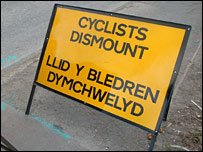
Bi-lingual signs that should have read 'Cyclists dismount', were actually printed saying ' bladder inflammation upset' :) Oh how we laughed....
From BBC News Wales : -
Cyclists were left confused by a bilingual road sign telling them they had problems with an inflamed bladder.
The "cyclists dismount" sign between Penarth and Cardiff became "llid y bledren dymchwelyd" in Welsh - literally "bladder inflammation upset" (or tip or overturn).
The Vale of Glamorgan Council said new signs were being made.
It is possible that an online translation led to confusion between cyclists and cystisis.
The temporary sign at roadworks is to be replaced.
Sunday, August 13, 2006
Swansea, Knotweed capital of Britain

From the BBC link :-
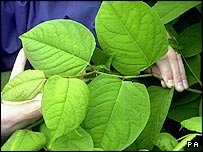
It seems that Swansea is at the top of the UK list for the knotty problems facing the would be eliminators of Japanese Knotweed.
We have an infestation at the back of Howell Poultry. Just as well we've sold it then!
Friday, August 11, 2006
Howell Poultry, RIP
Done it, Done it, Done it!
Howell Poultry is finally sold, if not quite sealed & delivered yet. as the joke goes, I have a small deposit...............
YaaaaaaaaaaaaaaaaaaaaY!
Thursday, August 10, 2006
Thursday, August 03, 2006
Castell Henllys Iron Age Hill Fort
We took the kids to http://www.castellhenllys.com/ yesterday, and had a damn fine day. Daniel, who is into http://www.microsoft.com/games/empires/ big time, spent the afternoon running around, fighting imaginary foes. Dylan had his face painted with woad, and thought he was the bees knees.
Monday, July 31, 2006
Uri Geller, Busted!
From boing boing, a classic video clip of uri geller being exposed as a charlatan.
you tube video
Apparently, he used bent spoons, which he would switch with the straight ones. Yet another childhood icon exposed as a fraud.
Saturday, July 29, 2006
How to Wiki!
What a great way to waste a bit of time!
For example, you log onto The wikipedia Main Page , and notice an article with a link to Floyd Landis , this year's maybe winner of the Tour de France, and notice that he comes from a conservative Mennonite community. So, you read all about the Mennonites (I love the idea of a religious sect, following a guy called Menno) and this leads you on to The Batenburgers. What could be more fun? And educational, too!
Wednesday, July 26, 2006
You're Nicked!

Thanks to the Wiltshire police for these lovely two photo's of the back of my car. Bastards.I pulled off the motorway at Swindon, and on to a lovely clear dual carriageway and hastened on my way, only to notice a flash in my rear view mirror, and a sign reducing the speed limit to 40 mph. You can see I was doing 55mph. So, that'll be £60 and 3 points, please. Bastards.
I won't bore you with the rights and wrongs of Speed cameras, entrapment, revenue generation, etc, etc. I just feel cheated.
On a positive note, the summons contained a web address where you can enter your details , and see the evidence that "they have taken down & will use against you". Banged to rights (whatever that means)
:(